
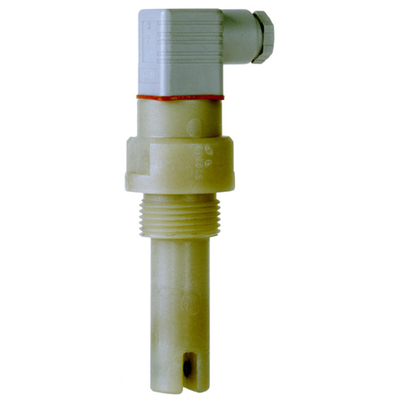
Condumax CLS21
Technical Data
CompareConductivity
| Measuring Principle | Conductive |
| Application | Water, waste water, process, media separation, industrial water. |
| Characteristic | 2-electrode system for application in the middle application range. |
| Measuring range | k=1: 10,0 µS/cm - 20,0 mS/cm |
| Measuring principle | Conductive conductivity cell with graphite electrodes for applications in the middle range. |
| Design | 2-electrode system with parallel arranged electrodes |
| Material | Cell shaft: PES Electrodes: graphite |
| Dimension | Diameter: 24 mm (0.936 inch) Length: 61 mm 2.37 inch) |
| Process temperature | max. 135°C (max. 275°F) |
| Process pressure | max. 16 bar at 20°С (max. 232psi at 68°F) |
| Temperature sensor | Optional with integrated Pt100 or PTC temperature sensor. |
| Ex certification | ATEX |
| Connection | Process connection: DN25, DN40, G1", Cable: 4-pole connector with thread Pg9 or fixed cable. |
| Ingress protection | IP65 (connector)IP67 (fixed cable) |
The Condumax CLS21 is a robust conductivity sensor for all processes and environments. It provides precise and reliable measured values and optimizes monitoring of process and product quality. What's more, the sensor offers high chemical, thermal and mechanical stability and long-term durability.
Benefits
-
Reliable and precise measured values for low-conductivity measurement applications
-
The best choice for high-pressure and high-temperature applications (up to 160°C)
-
Stainless steel housing and removable outer electrode for easy cleaning
-
Robust and durable
-
Quality certification includes an independent cell constant specification
Application areas
The Condumax CLS21 is used for conductivity measurement in the steam/water cycle of the power and energy industry:
-
Condensate monitoring
-
Boiler feedwater monitoring
-
Boiler blowdown control
-
Low-conductivity measurement in high-temperature and high-pressure applications
Various international explosion protection approvals, such as ATEX and FM, for use in hazardous areas
Spare Parts & Accessories 10
10 spare parts · click to expand
| Order code | Description | |
|---|---|---|
| 50014431 | ***回路插座Alte Material-Nummer: 115958 | Enquire |
| 50014433 | 密封Alte Material-Nummer: 115959 | Enquire |
| 50015632 | 电缆 插接头Alte Material-Nummer: 117234 | Enquire |
| 50081902 | 标定液 74.0 uS/cm500 ml, reference temperature 25oC. Precision solution referred to SRM of NIST. With temp. table for qualified calibration of conductivity measuring systems acc. to ISO | Enquire |
| 50081903 | 标定液500 ml, reference temperature 25oC. Precision solution referred to SRM of NIST. With temp. table for qualified calibration of conductivity measuring systems acc. to ISO. | Enquire |
| 50081904 | 标定液 1.406mS/cm500 ml, reference temperature 25oC. Precision solution referred to SRM of NIST. With temp. table for qualified calibration of conductivity measuring systems acc. to ISO | Enquire |
| 50081905 | 标定液500 ml, reference temperature 25oC. Precision solution referred to SRM to NIST. With temp. table for qualified calibration of conductivity measuring systems acc. to ISO | Enquire |
| 50081906 | 标定液500 ml, reference temperature 25oC. Precision solution referred to SRM of NIST. With temp. table for qualified calibration of conductivity measuring systems acc. to ISO | Enquire |
| 50004201 | 流通式安装附件for conductivity cells with G1" BSP Material: SS316; Connection: DN20 Range: max 160oC; max. 12bar at 20oC | Enquire |
| 50033772 | 流通式安装附件for conductivity sensors with G1" BSP Material: PP; Connection: G 1/2" Range: max 90oC; max. 6bar at 20oC | Details |
Configurator / Comparison
A
Measuring Principle Video
 Click to play
Manuals & Documents 7
All documents for this model7 documents · click to expand
Condumax CLS15/16/21 Chinese
Condumax CLS15/16/21 English
技术资料 Condumax CLS21, CLS21D Chinese
技术资料 Condumax CLS21, CLS21D Chinese
技术资料 Condumax CLS21/CLS21D Chinese
Condumax CLS21D/CLS21 Technical Information English
Technical Information CLS21 and CLS21D English
Case Studies
Municipal Wastewater Treatment · conductivity — Application Case
Customer Profile
The typical setting in Municipal Wastewater Treatment is the inlet, biological and outlet stages of a municipal plant. The measuring point is conductivity; the focus is measuring conductivity to judge water purity or chemical concentration.
Key Difficulties
Conditions are high solids and corrosive fractions, with large diurnal flow swings and, on top of that, effluent parameters drift and probes foul with sludge and biofilm, which a standard configuration cannot handle for long. The design therefore starts with choosing two- or four-electrode cells by range and corrosivity.
Implementation
The scope ran through the analyser range: selecting as part of a complete water-analysis system. Technically it hinges on choosing two- or four-electrode cells by range and corrosivity, and on these requirements: stable compliance with Grade 1A discharge limits and online data reporting.
Customer Benefit
In practice this means stable concentration control and less reagent and discharge waste, which cut the workload on the site maintenance team.
Food & Beverage · conductivity — Application Case
Project Background
The project covers dosing, pasteurising, filling and CIP stages. The work centres on conductivity and the core task is measuring conductivity to judge water purity or chemical concentration.
Operating Challenges
The medium and duty are characterised by syrups, dairy and beverages that scale easily, under strict hygienic requirements, and frequent cleaning demands instruments that withstand hot CIP/SIP caustic cycles. So conductivity cannot be specified generically — it calls for choosing two- or four-electrode cells by range and corrosivity.
Solution
The Ainstru engineering team worked through the analyser range: selecting as part of a complete water-analysis system. The configuration involves choosing two- or four-electrode cells by range and corrosivity, with these requirements in view: food-safety and hygienic design per 3-A / EHEDG.
Results
Since start-up the system has run steadily; the practical result is stable concentration control and less reagent and discharge waste.
Chemical & Pharmaceutical · conductivity — Application Case
Project Overview
The site is reactors, metering vessels and finished-product tanks. The customer wanted conductivity properly configured on the existing plant, with the aim of measuring conductivity to judge water purity or chemical concentration.
Technical Challenges
What actually causes trouble is highly corrosive media with solvents and crystallisation, partly in explosive atmospheres, and corrosion plus Ex protection shortens instrument life and makes downtime costly. All of this means the conductivity configuration has to involve choosing two- or four-electrode cells by range and corrosivity.
Configuration
Supply and installation were organised through the analyser range: selecting as part of a complete water-analysis system. On site this meant choosing two- or four-electrode cells by range and corrosivity, checked line by line against: Ex certification and GMP traceability of records.
Performance
After commissioning the outcome is stable concentration control and less reagent and discharge waste, and the readings are now used for process tuning.
Power & Energy · conductivity — Application Case
Site Conditions
This is a Power & Energy customer whose plant is at boiler feedwater, turbine condensate and FGD/DeNOx systems. The main task was measuring conductivity to judge water purity or chemical concentration.
The Problem
The difficulty lies in high temperature and pressure with both steam and saline water; at the same time drift under high temperature and pressure, with very costly unplanned outages. Specification therefore means choosing two- or four-electrode cells by range and corrosivity.
What We Did
We took a analyser range approach — selecting as part of a complete water-analysis system. Delivery was built around choosing two- or four-electrode cells by range and corrosivity, with point-by-point checks on: compliance with power-industry codes and unit availability targets.
Operating Outcome
In service the system performs as intended — stable concentration control and less reagent and discharge waste, with routine maintenance falling noticeably.
Related Products
 Endress+Hauser
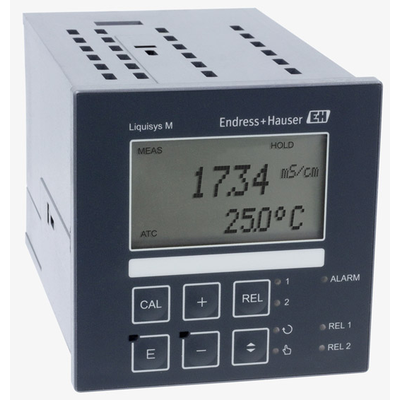
Liquisys M CLM223
 Endress+Hauser
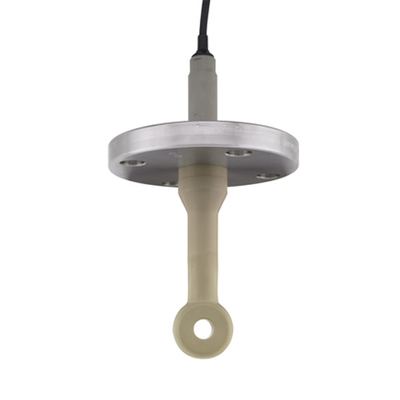
Indumax CLS50D
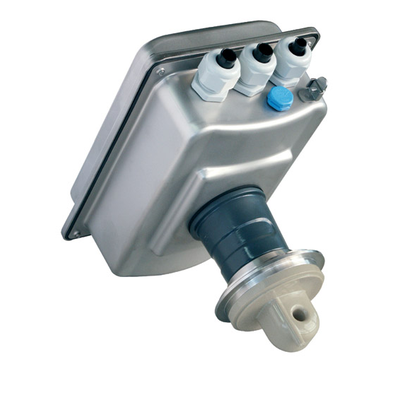 Endress+Hauser
Smartec S CLD134
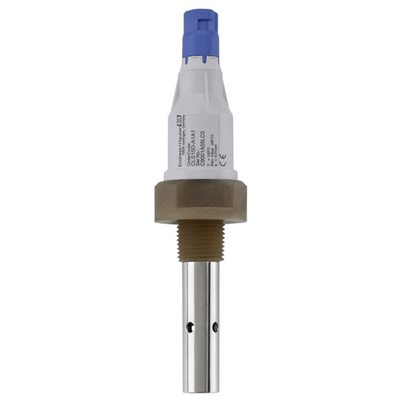 Endress+Hauser
Condumax CLS15D
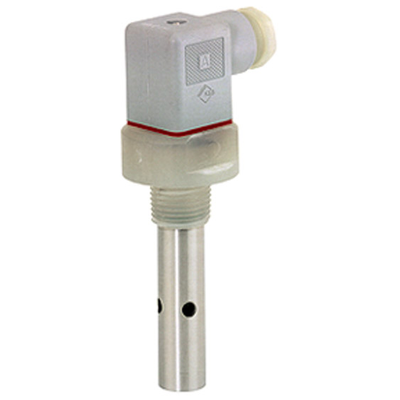 Endress+Hauser
Condumax CLS19
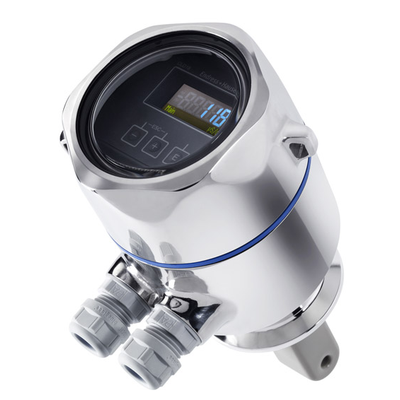 Endress+Hauser
Smartec CLD18
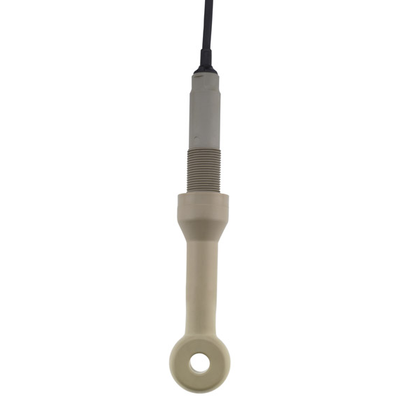 Endress+Hauser
Indumax CLS50
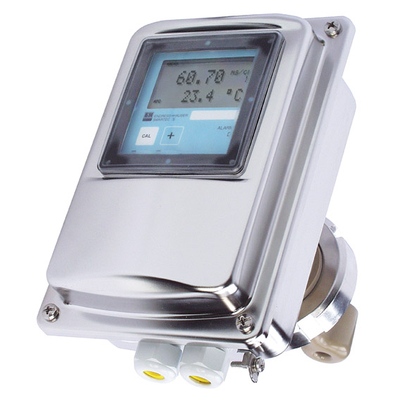 Endress+Hauser