
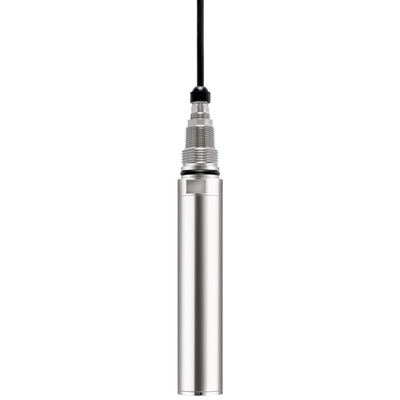
Turbimax CUS51D
Technical Data
CompareTotal Solids / Total Suspended Solids
| Measuring Principle | Four beam alternating light |
| Application | Wastewater, process water and primary water treatment applications. Turbidity and suspended solids measurement at all stages of the wastewater treatment process and at primary water treatment applications with medium to high turbidities. |
| Installation | Insitu (immersion in process or retractable holder), extractive with sample and flow cell |
| Design | 40 mm sensor, stainless steel |
| Dimension | 194 mm x 40 mm |
| Material | Stainless steel 316L |
| Measuring range | For formazin: 0 to 4000 FNU Display range up to 9999 FNU For sludge: 0 to 300 g/L The achievable measuring range depends very much on the media |
| Connection | G1, NPT3/4" |
| Ingress protection | IP68 (1 m / 3.3 ft) water column with 1N KCl during 60 days |
Turbidity
| Measuring Principle | Four beam alternating light |
| Application | Wastewater, process water and primary water treatment applications. Turbidity and suspended solids measurement at all stages of the wastewater treatment process and at primary water treatment applications with medium to high turbidities. |
| Installation | Insitu (immersion in process or retractable holder), extractive with sample and flow cell |
| Measuring range | For formazin: 0 to 4000 FNU Display range up to 9999 FNU For sludge: 0 to 300 g/L The achievable measuring range depends very much on the media |
| Measuring principle | Scattered light in 90°/135° and 4beam cross light |
| Design | 40 mm sensor, stainless steel |
| Material | Stainless steel 316L |
| Dimension | 194 mm x 40 mm |
| Process temperature | Process temperature: -5 to 50 °C (23 to 122 °F) Ambient temperature: -20 to 60 °C (-4 to 140 °F) |
| Connection | G1, NPT3/4" |
| Ingress protection | IP68 (1 m / 3.3 ft) water column with 1N KCl during 60 days |
The Turbimax CUS51D is an intelligent sensor for measuring suspended solids concentration that allows unattended
operation during measurement. Its unique design is highly robust, and thanks to its self-cleaning function, maintenance is required only infrequently. The sensor is selected according to different comprehensive analysis models to suit the specific application. With Memosens digital technology, the CUS51D combines maximum process and data integrity with simple operation. It is corrosion- and moisture-resistant and can be calibrated in the laboratory.
Benefits:
-
One sensor for many applications: “one device, many uses” optimizes inventory, speeds up projects and simplifies lifecycle management
-
Optimizes all types of measuring tasks: built-in analysis modules for various measuring ranges
-
Fast and simple commissioning: sensors are precalibrated and preset at the factory
-
Unattended operation: intelligent design with complex self-cleaning functions reduces maintenance
-
Perfect process suitability: fast sensor positioning with the Flexdip CYA112 and CYH112 assemblies
Application areas:
The Turbimax CUS51D measures suspended solids and turbidity, suitable for:
-
Wastewater treatment plants:
- Solids content measurement during aeration, circulation and sludge treatment
- flocculant dosing
- turbidity measurement at the outlet -
Drinking water and process water:
- solids content measurement in sludge treatment
- flocculant dosing -
Utilities:
- Solids content measurement during aeration, circulation and sludge treatment
- Flocculant dosing
Commonly used models: CUS51D-AAC1A3 and CUS51D-AAD1A3
Spare Parts & Accessories 7
7 spare parts · click to expand
| Order code | Description | |
|---|---|---|
| 71110782 | 清洁头 CUS51D 6 or 8mm | Details |
| 71110783 | 清洁头 CUS51D 1/4" | Enquire |
| XPC0031- | CYR51备件及易耗件Spare and wear parts CYR51 Mechanical cleaning | Enquire |
| 71072583 | ***清洗单元,230V空压机 | Enquire |
| 71194623 | 输出空气净化 | Enquire |
| 71144335 | 传感器适配器flowcell CYA251 | Enquire |
| 71093377 | 安装附件fast sensor assembly | Enquire |
Configurator / Comparison
A
A
Measuring principle video
 Click to play
Source: public information from the Endress+Hauser website
Manuals & Documents 5
All documents for this modelProduct Videos
Case Studies
Municipal Wastewater Treatment · turbidity — Application Case
Project Background
The project covers the inlet, biological and outlet stages of a municipal plant. The work centres on turbidity and the core task is measuring turbidity as an indicator of suspended solids and filtration.
Operating Challenges
The medium and duty are characterised by high solids and corrosive fractions, with large diurnal flow swings, and effluent parameters drift and probes foul with sludge and biofilm. So turbidity cannot be specified generically — it calls for choosing 90° scatter or surface scatter by range, with de-bubbling.
Solution
The Ainstru engineering team worked through the analyser range: selecting as part of a complete water-analysis system. The configuration involves choosing 90° scatter or surface scatter by range, with de-bubbling, with these requirements in view: stable compliance with Grade 1A discharge limits and online data reporting.
Results
Since start-up the system has run steadily; the practical result is backwashing triggered by water quality, saving water while holding quality.
Food & Beverage · turbidity — Application Case
Project Overview
The site is dosing, pasteurising, filling and CIP stages. The customer wanted turbidity properly configured on the existing plant, with the aim of measuring turbidity as an indicator of suspended solids and filtration.
Technical Challenges
What actually causes trouble is syrups, dairy and beverages that scale easily, under strict hygienic requirements, and frequent cleaning demands instruments that withstand hot CIP/SIP caustic cycles. All of this means the turbidity configuration has to involve choosing 90° scatter or surface scatter by range, with de-bubbling.
Configuration
Supply and installation were organised through the analyser range: selecting as part of a complete water-analysis system. On site this meant choosing 90° scatter or surface scatter by range, with de-bubbling, checked line by line against: food-safety and hygienic design per 3-A / EHEDG.
Performance
After commissioning the outcome is backwashing triggered by water quality, saving water while holding quality, and the readings are now used for process tuning.
Chemical & Pharmaceutical · turbidity — Application Case
Site Conditions
This is a Chemical & Pharmaceutical customer whose plant is at reactors, metering vessels and finished-product tanks. The main task was measuring turbidity as an indicator of suspended solids and filtration.
The Problem
The difficulty lies in highly corrosive media with solvents and crystallisation, partly in explosive atmospheres; at the same time corrosion plus Ex protection shortens instrument life and makes downtime costly. Specification therefore means choosing 90° scatter or surface scatter by range, with de-bubbling.
What We Did
We took a analyser range approach — selecting as part of a complete water-analysis system. Delivery was built around choosing 90° scatter or surface scatter by range, with de-bubbling, with point-by-point checks on: Ex certification and GMP traceability of records.
Operating Outcome
In service the system performs as intended — backwashing triggered by water quality, saving water while holding quality, with routine maintenance falling noticeably.
Power & Energy · turbidity — Application Case
Application Context
boiler feedwater, turbine condensate and FGD/DeNOx systems is a typical Power & Energy duty. The project started from turbidity, focusing on measuring turbidity as an indicator of suspended solids and filtration.
Process Constraints
drift under high temperature and pressure, with very costly unplanned outages, and high temperature and pressure with both steam and saline water only amplify it. The turbidity specification must therefore cover choosing 90° scatter or surface scatter by range, with de-bubbling.
Delivery Approach
Delivery was handled as the analyser range — selecting as part of a complete water-analysis system. Execution centred on choosing 90° scatter or surface scatter by range, with de-bubbling, together with compliance with power-industry codes and unit availability targets.
Field Results
Operation shows the benefit clearly — backwashing triggered by water quality, saving water while holding quality, with confidence in this measuring point improving markedly.
Related Products
 Endress+Hauser
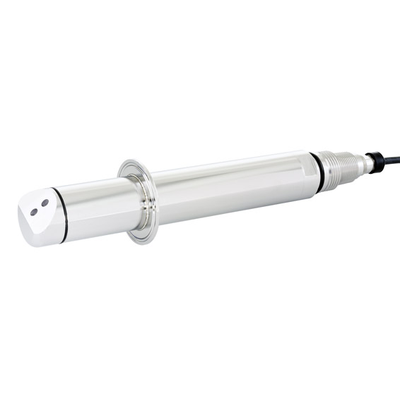
Turbimax CUS52D
 Endress+Hauser
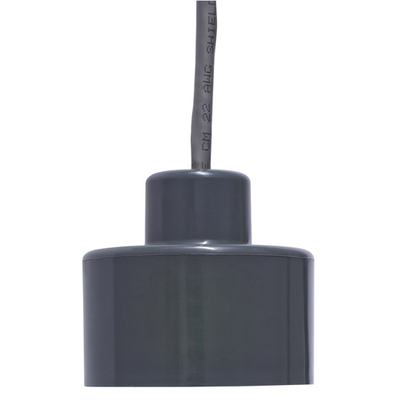
Turbimax CUS71D
 Endress+Hauser
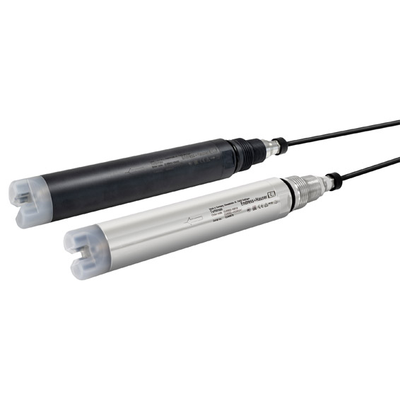
Turbimax CUS50D
 Endress+Hauser
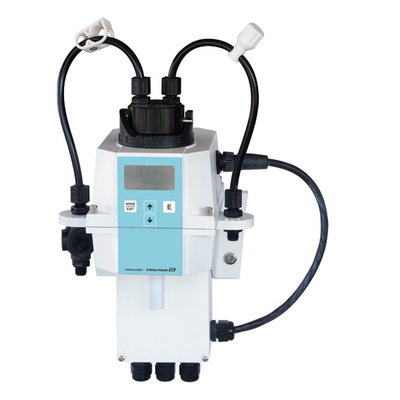
Turbimax CUE22, compact white light
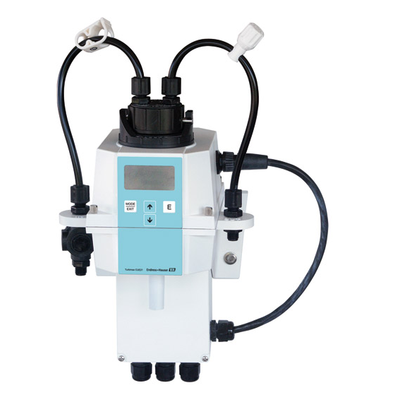 Endress+Hauser
Turbimax CUE21, compact infrared
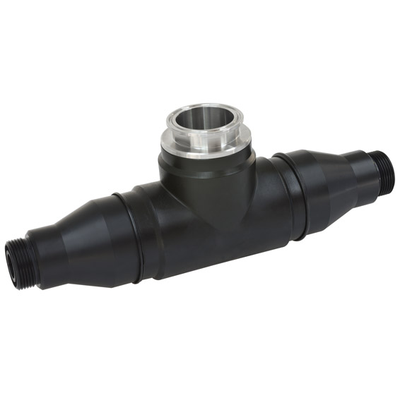 Endress+Hauser
Flowfit CUA252
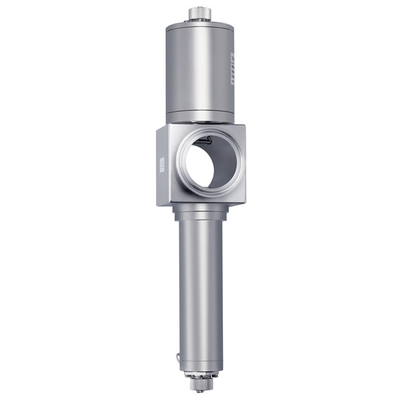 Endress+Hauser
Sensor OUSTF10
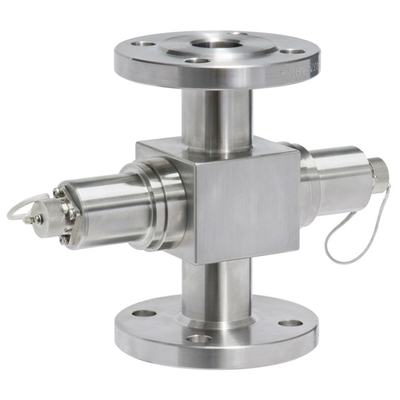 Endress+Hauser