
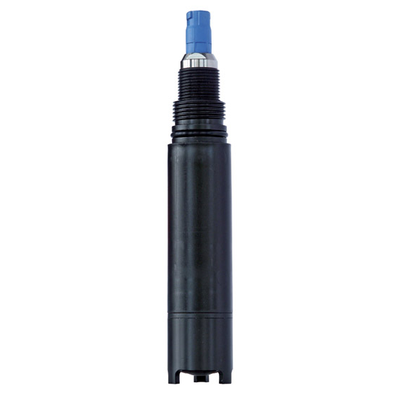
Oxymax W COS51D
Technical Data
CompareOxygen
| Measuring Principle | |
| Application | Aeration tank, river monitoring, water treatment, fish farming, sewage treatment plants |
| Characteristic | Amperometric 3-electrode longterm-stable sensor to measure dissolved oxygen |
| Measuring range | 0.01 to 100 mg/l 0.00 to 1000 %SAT 0 to 2000 hPa |
| Measuring principle | Closed membrane covered amperometric 3-electrode system |
| Design | Digital signal transmission Calibration datas stored in the sensor |
| Material | Sensor body: POM Membrane cap: POM |
| Dimension | Diameter: 40mm (1.57 inch) Shaft length: 144 mm (5.67 inch) |
| Process temperature | -5 to 50 °C (20 to 120 °F) |
| Process pressure | max. 10 bar (max. 145 psi) |
| Connection | Memosens connector Process: G1, NPT 3/4" |
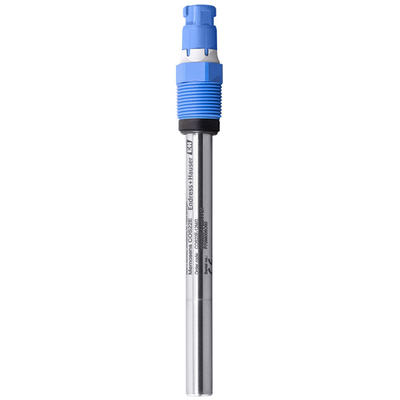
The Oxymax COS51D is a reliable, high-precision dissolved oxygen sensor for various water and wastewater applications (usable in hazardous areas). The low-maintenance design and long service life make the sensor economical to use. With Memosens digital technology, the Oxymax COS51D offers maximum process and data integrity combined with simple operation. Laboratory calibration and device pre-maintenance are possible.
Benefits
Highest measuring accuracy
Sensor load data logging for easy traceability
Intelligent self-monitoring sensor
Low calibration requirements; simple calibration in air is sufficient
Long maintenance intervals
Explosion-proof version, can be used in hazardous areas
Application areas
The Oxymax COS51D is used for dissolved oxygen concentration measurement:
Wastewater treatment plants:
- O2 aeration basin control
- Process water treatment and monitoring; waterworks:
- Drinking water condition monitoring (oxygen enrichment, corrosion protection, etc.)
- Water quality monitoring of rivers, lakes or seawater
Utilities:
- O2 biological treatment control
- Process water treatment and monitoring
Suitable for hazardous areas (ATEX, FM, CSA).
Spare Parts & Accessories 19
19 spare parts · click to expand
| Order code | Description | |
|---|---|---|
| COV45- | COS41/COS51x维护包COV45Maintenance parts for Memosens and fixed cable sensors COS51x and COS41. Include membrane caps, o-rings and further maintenance materials. | Enquire |
| 71194623 | 输出空气净化 | Enquire |
| 71495128 | Kit COSxx 标准保护帽 | Enquire |
| 71495130 | COSxx溶解氧传感器保护帽,适用于渔场养殖应用 | Enquire |
| 71495126 | COSxx 8.5 mm孔径笼式溶解氧传感器保护帽 | Enquire |
| 71110801 | 清洁头 COS61/61D 6/8mm | Enquire |
| 71110802 | 清洁头 COS61/61D 1/4" | Enquire |
| 71072583 | ***清洗单元,230V空压机 | Enquire |
| 51518599 | COS31/41/51D/61/71标定帽Calibration cap, COS31/41/61/71 | Enquire |
| 51506976 | ***Set of 2x membrane cap COY31-WP2 pcs. ready made for sensors COS31, COS41 and COS51D standard | Enquire |
| 51500832 | 接线盒 RMto lengthen the cable for Memosens/CUS31/41. Protection class IP 65, with 2x Pg 13.5 | Enquire |
| 51506977 | ***Set of 2x membrane cap COY31S-WP2 pcs. ready made for sensors COS31, COS71 and COS51D (fast) | Enquire |
| 51506985 | ***Sealing set COY31-OR3 pieces O-rings for sensors COS31, COS41, COS51D and COS71. | Enquire |
| 51506973 | ***Polishing foil COY31-PF10 pcs. for cleaning of the gold cathode for sensors COS31, COS41, COS51D and COS71. | Enquire |
| 51506785 | ***Accessory kit COY31-S-ZContent: COY3-F, COY31S-WP, COY31-OR and COY31PF for sensors COS31, COS71 and COS51D (fast) | Enquire |
| 50053276 | ***Protectiv.cage for COS31/41/51D/61/71protection cage | Enquire |
| 50081787 | ***COY 3-SK membrane protective basketfor immersion of diss. oxygen sensors COS31/41/51D/61 in fish ponds. | Enquire |
| 50001041 | ***DO/氯传感器零电标定粉末Chemical producing water free of oxygen or chlorine for test purposes. | Enquire |
| COY8- | 零点凝胶 COY8Zero point: Verification, calibration, adjustment at zero point of oxygen and disinfection sensors ::Amperometric and optical sensors ::12, 25 and 40mm diameter ::Application in the lab, in the field | Enquire |
Configurator / Comparison
A
Measuring principle video
 Click to play
Source: public information from the Endress+Hauser website
Manuals & Documents 6
All documents for this model6 documents · click to expand
Case Studies
Municipal Wastewater Treatment · dissolved oxygen — Application Case
Site Conditions
This is a Municipal Wastewater Treatment customer whose plant is at the inlet, biological and outlet stages of a municipal plant. The main task was measuring dissolved oxygen for biological processes and deaeration control.
The Problem
The difficulty lies in high solids and corrosive fractions, with large diurnal flow swings; at the same time effluent parameters drift and probes foul with sludge and biofilm. Specification therefore means choosing membrane or optical sensors by basin depth and cleaning method.
What We Did
We took a analyser range approach — selecting as part of a complete water-analysis system. Delivery was built around choosing membrane or optical sensors by basin depth and cleaning method, with point-by-point checks on: stable compliance with Grade 1A discharge limits and online data reporting.
Operating Outcome
In service the system performs as intended — blowing follows oxygen demand, cutting aeration power noticeably, with routine maintenance falling noticeably.
Food & Beverage · dissolved oxygen — Application Case
Application Context
dosing, pasteurising, filling and CIP stages is a typical Food & Beverage duty. The project started from dissolved oxygen, focusing on measuring dissolved oxygen for biological processes and deaeration control.
Process Constraints
frequent cleaning demands instruments that withstand hot CIP/SIP caustic cycles, and syrups, dairy and beverages that scale easily, under strict hygienic requirements only amplify it. The dissolved oxygen specification must therefore cover choosing membrane or optical sensors by basin depth and cleaning method.
Delivery Approach
Delivery was handled as the analyser range — selecting as part of a complete water-analysis system. Execution centred on choosing membrane or optical sensors by basin depth and cleaning method, together with food-safety and hygienic design per 3-A / EHEDG.
Field Results
Operation shows the benefit clearly — blowing follows oxygen demand, cutting aeration power noticeably, with confidence in this measuring point improving markedly.
Chemical & Pharmaceutical · dissolved oxygen — Application Case
Customer Profile
The typical setting in Chemical & Pharmaceutical is reactors, metering vessels and finished-product tanks. The measuring point is dissolved oxygen; the focus is measuring dissolved oxygen for biological processes and deaeration control.
Key Difficulties
Conditions are highly corrosive media with solvents and crystallisation, partly in explosive atmospheres and, on top of that, corrosion plus Ex protection shortens instrument life and makes downtime costly, which a standard configuration cannot handle for long. The design therefore starts with choosing membrane or optical sensors by basin depth and cleaning method.
Implementation
The scope ran through the analyser range: selecting as part of a complete water-analysis system. Technically it hinges on choosing membrane or optical sensors by basin depth and cleaning method, and on these requirements: Ex certification and GMP traceability of records.
Customer Benefit
In practice this means blowing follows oxygen demand, cutting aeration power noticeably, which cut the workload on the site maintenance team.
Power & Energy · dissolved oxygen — Application Case
Project Background
The project covers boiler feedwater, turbine condensate and FGD/DeNOx systems. The work centres on dissolved oxygen and the core task is measuring dissolved oxygen for biological processes and deaeration control.
Operating Challenges
The medium and duty are characterised by high temperature and pressure with both steam and saline water, and drift under high temperature and pressure, with very costly unplanned outages. So dissolved oxygen cannot be specified generically — it calls for choosing membrane or optical sensors by basin depth and cleaning method.
Solution
The Ainstru engineering team worked through the analyser range: selecting as part of a complete water-analysis system. The configuration involves choosing membrane or optical sensors by basin depth and cleaning method, with these requirements in view: compliance with power-industry codes and unit availability targets.
Results
Since start-up the system has run steadily; the practical result is blowing follows oxygen demand, cutting aeration power noticeably.
Related Products
 Endress+Hauser
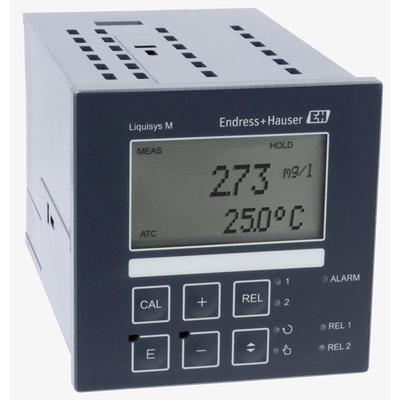
Liquisys M COM223
 Endress+Hauser
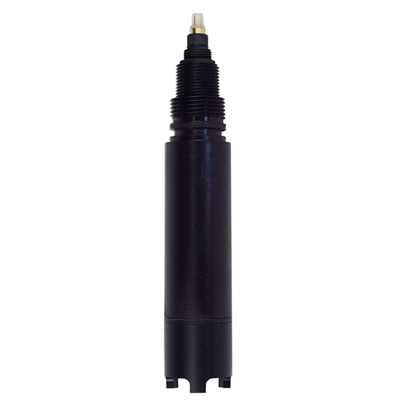
Oxymax W COS41
 Endress+Hauser
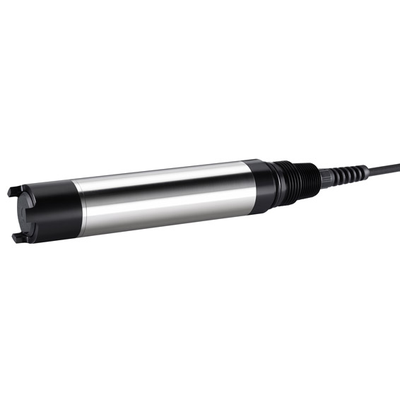
Oxymax COS61D
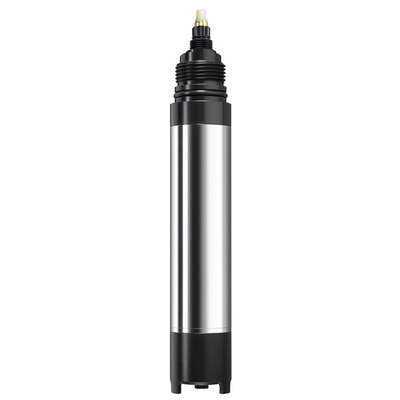 Endress+Hauser
Oxygen sensor OXYMAX-W COS61
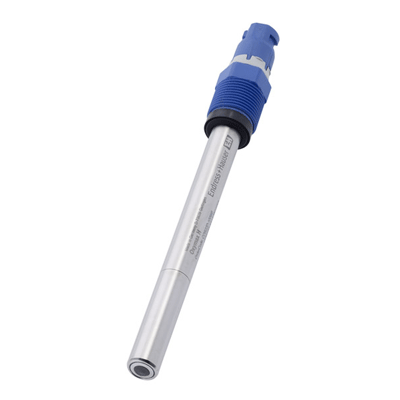 Endress+Hauser
Dissolved oxygen sensor
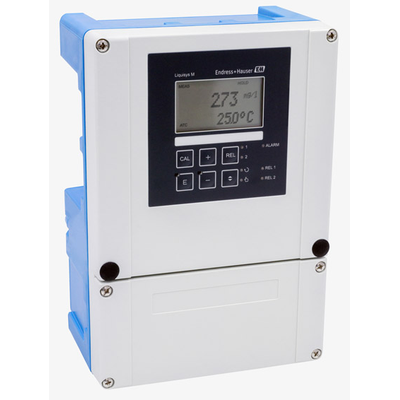 Endress+Hauser
Liquisys M COM253
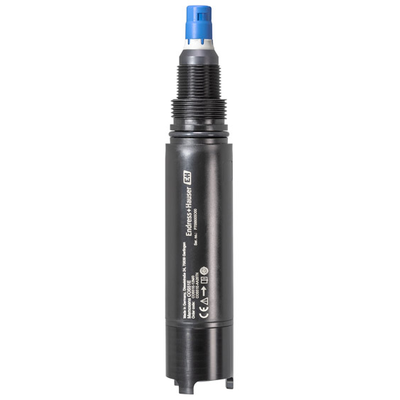 Endress+Hauser
Memosens COS51E
 Endress+Hauser